What it does
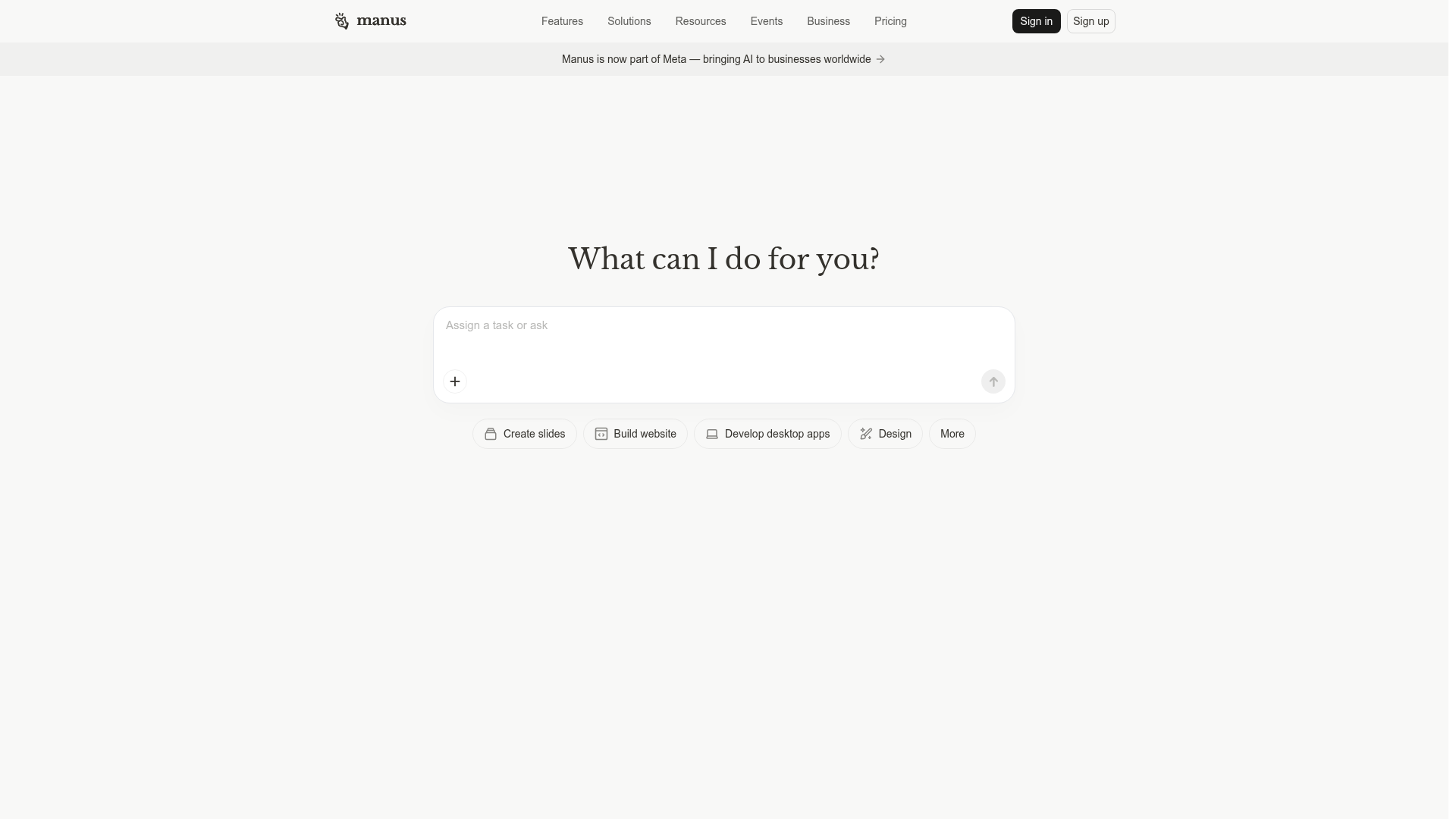
Manus is an autonomous AI agent. You give it a task. It plans, executes, and reports back without asking for mid-task approvals. It can browse the web, take screenshots, watch videos, and synthesize what it finds into a structured report.
It is now part of Meta.
Best for
Designers who run deep research tasks as part of their work: artist studies, competitive scans, trend reports, source-gathering for articles. Less useful for quick questions (use Perplexity or ChatGPT) or for code (use Claude Code).
What makes it different
| Most AI tools | Manus |
|---|---|
| Stop to ask clarifying questions | Plans and executes the whole task |
| Text-only output | Screenshots, video transcripts, structured reports |
| One question at a time | Multiple concurrent tasks |
| You drive every step | You queue, walk away, review |
How to use it well
Honest limitations
- Hallucinates citations sometimes. Always verify quotes and statistics.
- Slower than chat for simple questions.
- Cannot work on a specific local project (use Claude Code for that).
- Credits run out fast on big research tasks.
Guides that use this tool
Step-by-step walkthroughs for this tool
Try with Prompts
Ready-to-use prompts related to this guide
Translate brand guidelines (PDF, style guide) into a structured set of design tokens with proper naming and hierarchy.
Generate comprehensive component documentation including props, usage guidelines, do's and don'ts, and accessibility notes from a component's code.
Generate a full component specification from just a component name, including props, variants, states, tokens, and accessibility requirements.